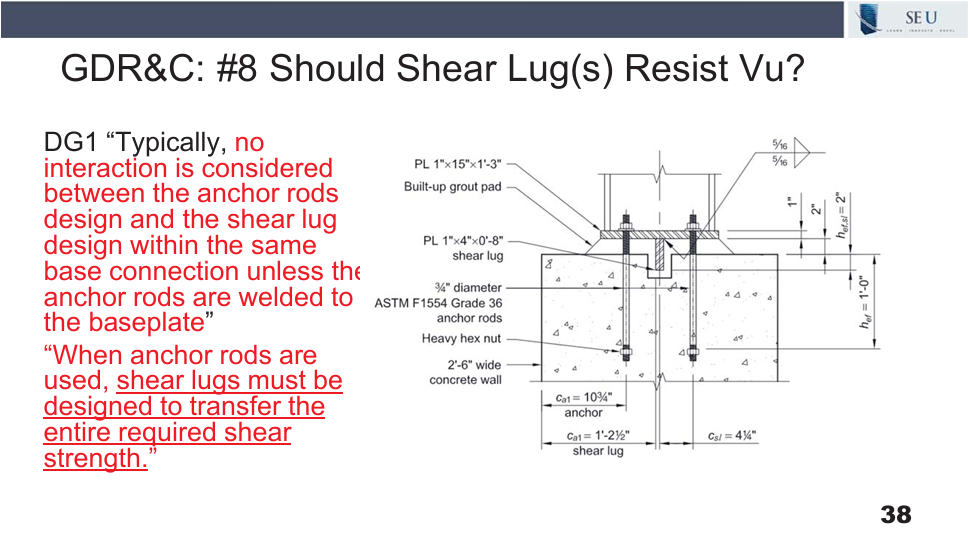
Shear lugs can be necessary when large shear forces are being transferred at a baseplate attachment, however, the interaction between the shear lug, base plate, and anchor rods can be muddled depending on the way the connection is detailed. Should the anchors carry a portion of the shear force or not?
In the July 2026 SEU Session, Barry Arnold, PE, SE, retired from ARW Engineers, presented Shear Lugs: Myths, Mysteries, and Misunderstandings when Dealing with Concrete Connections. Barry outlined the structural engineer’s responsibilities when designing shear lugs from both the structural steel and concrete standpoint. He noted what information is not contained in the applicable code but should be considered in the design of shear lugs, and pointed out some common pitfalls with shear lugs which can lead to unsatisfactory results.
Barry shared some General Design Requirements and Considerations for the use of shear lugs and specifically noted some useful guidance from AISC Design Guide 1 (Third Edition): Base Connection Design for Steel Structures. As noted in Design Guide 1, shear lugs are typically designed to transfer the entire required shear strength, and no interaction is considered between the anchor rods and the shear lug. However, if the anchor rods are welded to the base plate, then shear interaction should be considered. Thus checks for steel strength in shear, concrete breakout strength in shear, and concrete pryout strength in shear should be evaluated. Barry noted that ACI 17.11.1.1.3 requires that anchors welded to the attachment base plate be considered for the tension and shear interaction requirements of 17.8, and shall include a portion of the total shear on the anchor. This guidance from ACI and AISC Design Guide 1 clarifies when anchors should be included in the shear design along with the shear lug, and when they remain a tensile only component of the base plate design.